

Sustainability for Enterprises, Projects & Industries
Technology, data and strategy to decarbonize, certify and transform your infrastructure
We fuse industrial measurement technology with strategic consulting to turn your infrastructure into a verifiably sustainable asset.
Where other consultants deliver static reports, we deploy real-time data infrastructure. Where other integrators install sensors, we connect each data point to a certification and reporting strategy. The result: sustainability that is measured, verified and defensible before any auditor.
0 +
Certified projects
0 %
Certification approval rate
0 +
Specialized services
0 +
Years of experience
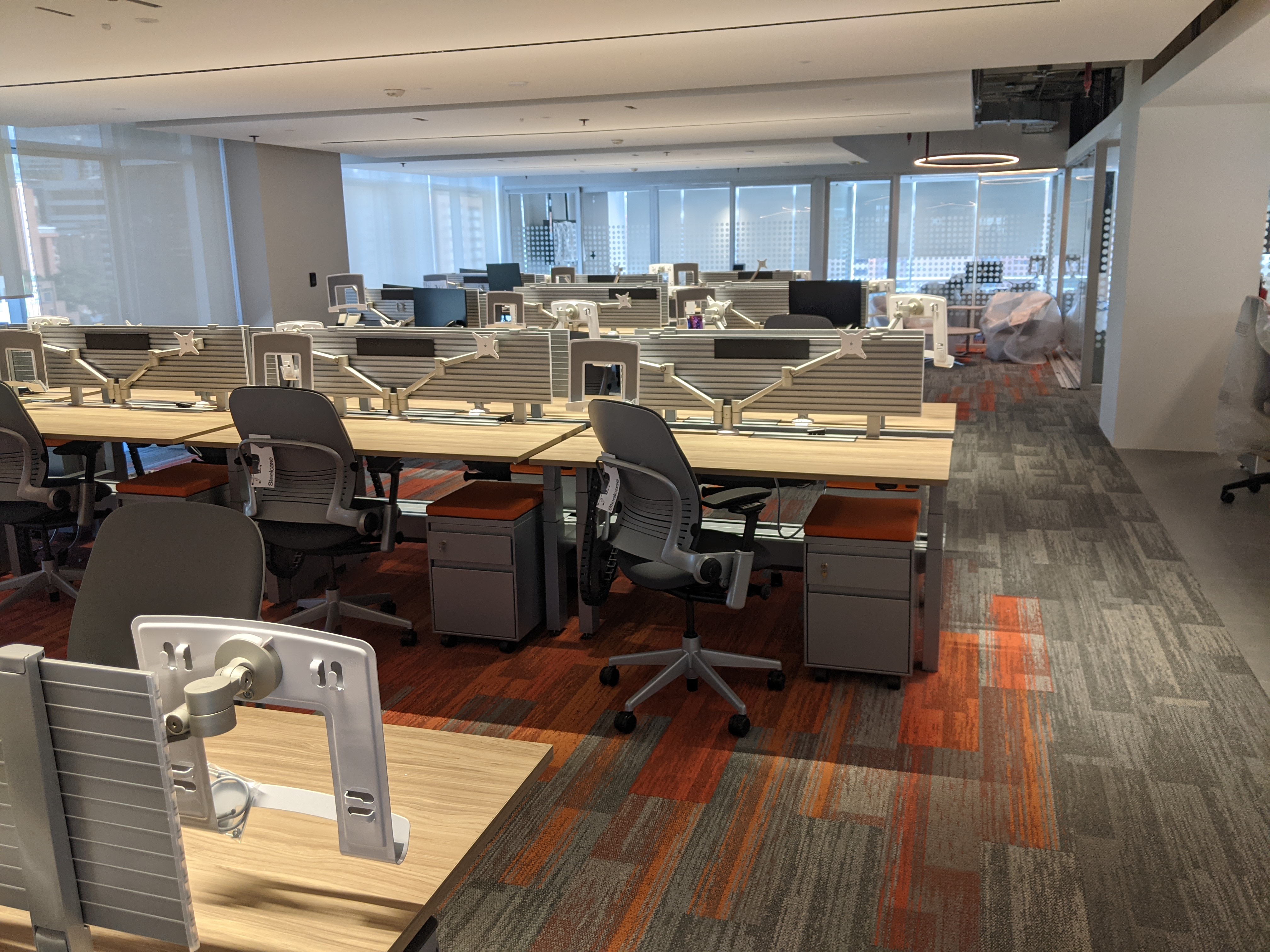
First LEED-certified office in Venezuela
We led the LEED v4 ID+C certification of the Mastercard Venezuela Office — the first office in the country with this certification and the first fully automated. A landmark project that reactivated the Venezuela Green Building Council and boosted the sustainability culture in the region.
8 Sectors, One Standard of Excellence
Each sector presents unique challenges. Our response is always the same: real data, international standards and precision technology.
Corporate
Sustainability is the greatest competitive advantage an organization and its physical assets can have today. In the corporate environment, we focus on operational resilience and talent attraction through healthy and efficient spaces.
Consulting Stages
Diagnosis/Feasibility
Energy baseline assessment through an ASHRAE Level 1 audit, gap analysis against LEED/EDGE certifications, Arc diagnosis and indoor air quality (IAQ) audits.
Planning/Documentation
Decarbonization roadmap, SDG and Paris Agreement alignment, and efficiency plan design under ISO 50001 and ASHRAE 90.1 standards.
Verification
Real-time consumption monitoring through intelligent sub-metering and IAQ follow-up audits according to ASHRAE 62.1.
Reporting
ESG performance dashboards aligned with CSRD and GRI, and external audit support for international certifications.
Implementation of "Smart Offices" using AI to optimize comfort and reduce OPEX, meeting growing climate transparency requirements in LatAm and Europe.
Industry
In the industrial sector, energy efficiency equals profitability. We integrate OT technology with sustainability strategies to decarbonize critical processes.
Consulting Stages
Diagnosis/Feasibility
ISO 50001/ASHRAE Level 1 energy audits and identification of significant energy uses (SEU) in motors, boilers and cold-chain systems.
Planning/Documentation
Design and implementation of Energy Management Systems under ISO 50001 and industrial waste management plans.
Verification
Water and carbon footprint measurement (Scopes 1, 2 and 3) using industrial sensors and HART/Modbus protocols.
Reporting
Verifiable emission reduction certificates and industrial materiality reports for international compliance requirements.
Full supply chain traceability and circular economy, enabling LatAm industries to compete in European and US markets with auditable data.
Hospitality & Tourism
Sustainability in hospitality has gone from being an "extra" to a business imperative driven by guest expectations and energy costs.
Consulting Stages
Diagnosis/Feasibility
Thermal comfort audits and energy modeling to identify potential HVAC savings (up to 45%).
Planning/Documentation
Single-use plastics elimination strategy and water efficiency plans with low-flow devices and greywater systems.
Verification
Implementation of AI-powered smart thermostats and occupancy sensors that automatically turn off lighting and outlets after 20 minutes of vacancy.
Reporting
Per-stay carbon footprint visualization for guests and performance reports for investors under ESG reporting frameworks.
"Visible sustainability" where guests interact with hotel efficiency through digital interfaces, strengthening brand loyalty.
Healthcare
Decarbonizing critical infrastructure that operates 24/7 without compromising patient safety is the sector's greatest challenge.
Consulting Stages
Diagnosis/Feasibility
Critical fresh-air infrastructure audits and air-quality monitoring in sterile areas under the ASHRAE 170 standard.
Planning/Documentation
Climate action plan for the healthcare sector and electrical supply resilience strategies through microgrids and renewables.
Verification
Precision ventilation control and HEPA filtration, plus monitoring of medical gas consumption and energy in imaging equipment.
Reporting
Social and environmental impact reports aligned with Green Health standards and compliance with local and global emission regulations.
Telemedicine and digitalization to reduce transport-related carbon footprint, along with less resource-intensive laboratories (reduced plastics and biological waste).
Education
Smart Campuses act as living sustainability laboratories, optimizing the management of multiple buildings.
Consulting Stages
Diagnosis/Feasibility
Baseline measurement across dispersed campuses and gap analysis against the "Net Zero Campus" roadmap.
Planning/Documentation
Institutional alignment with SDG 4 (Education) and SDG 13 (Climate Action), and adaptive learning space design.
Verification
Class-schedule-based lighting and HVAC automation (LTT) and solar energy plant integration with storage.
Reporting
University sustainability reports and public dashboards that foster environmental awareness in the student community.
Use of Digital Twins to simulate and optimize campus thermal behavior before making major investments.
Culture
Modern museums are change catalysts that must balance heritage preservation with energy efficiency.
Consulting Stages
Diagnosis/Feasibility
Preventive conservation audits (humidity and temperature control) and existing lighting assessment.
Planning/Documentation
Ecological, economic and social sustainability strategy, integrating environmental content into museum narratives.
Verification
High-efficiency LED lighting with motion sensors and IAQ monitoring systems to protect artworks and visitors.
Reporting
Institutional carbon footprint measurement and accessibility and community participation reports aligned with SDGs.
Process digitalization and augmented reality experiences that reduce the need for physical transport of heritage objects, lowering indirect emissions.
Financial
In the financial sector, sustainability translates into climate risk management and physical asset valuation.
Consulting Stages
Diagnosis/Feasibility
In addition to our Corporate-sector services, we advise on selection criteria for sustainable projects to finance, plus environmental site assessments (Phase I and II ESA) to identify environmental liabilities in real-estate collateral or investment portfolios.
Planning/Documentation
Alignment with TCFD recommendations and IFRS S1/S2 standards for climate-related financial risk disclosure.
Verification
Energy performance monitoring of financed assets through IoT platforms, ensuring the veracity of "Green Credits".
Reporting
Coherent integration of financial and sustainability reports (Double Materiality) to strengthen investor confidence.
Using technology to generate "audit-ready" data, mitigating greenwashing risk and improving the institution's credit rating.
Retail
Sustainable retail combines operational efficiency with a superior and healthy customer experience.
Consulting Stages
Diagnosis/Feasibility
Indoor air quality audits to verify healthy spaces (IAQ) and energy-consumption analysis across sales and common areas.
Planning/Documentation
Circular-economy strategy and responsible supply-chain management, aligned with applicable waste-management legislation and responsible production and consumption commitments.
Verification
Demand-controlled ventilation using CO₂ sensors (ASHRAE 62.1) and sub-metering so each tenant is responsible for their energy consumption.
Reporting
Sustainability dashboards for shopping-center management and climate-commitment compliance reports to attract global brands.
"Recommerce" and buyback programs integrated into the physical retail operation, increasing customer traffic and reducing waste.
4 Stages That Apply to Every Sector
Regardless of the sector, our approach follows a rigorous, repeatable process that ensures measurable and certifiable results.
Assessment
Initial evaluation, baseline measurement, gap analysis and definition of achievable targets. Energy modeling and ASHRAE energy audit.
Strategy
Strategy definition, certification roadmap, target setting and SDG alignment.
Implementation
Technical documentation, material selection, carbon footprint measurement and evidence management.
Certification
Application submission, external audit support, energy and indoor air quality audits, compliance verification and post-certification follow-up.
Regulatory Framework
Compliance and certification under the most relevant international standards in sustainability and efficiency.
Energy management system for continuously improving an organization's energy performance.
Quantification, monitoring and reporting of GHG emissions and removals at organizational and product level.
Minimum energy efficiency requirements standard for building design and construction.
Minimum ventilation rates and air quality requirements for acceptable indoor spaces.
Specific ventilation and air quality requirements for healthcare facilities.
Global accounting framework for measuring, managing and reporting GHG emissions in Scopes 1, 2 and 3.
Reporting frameworks that define metrics and indicators for ESG information disclosure.
Recommendations for disclosing climate-related financial risks to investors and regulators.
ISSB standards for disclosing sustainability and climate-related risks and opportunities.
Certifications & Standards




LEED & EDGE Specialists
We complement our offering with WELL (health and wellness), Net Zero (net-zero carbon) and B-Corp (corporate responsibility) certifications, available through our network of specialized partners. One team, multiple standards.

Strategy Aligned with the Sustainable Development Goals
Every sustainability project we develop is aligned with the United Nations Sustainable Development Goals. Our technology-driven approach directly contributes to five key SDGs through energy efficiency, resilient infrastructure, sustainable cities, responsible production and climate action.
Sustainable Development Goals (SDGs) — United Nations
Carbon Footprint: Three Scopes, One System
Scope 1
Direct EmissionsCombustion in boilers, generators and owned vehicle fleets. Fugitive refrigerant emissions in HVAC systems.
HART instrumentation in boilers, Modbus gas meters, refrigerant leak sensors connected via MQTT.
Combustion optimization, predictive refrigerant maintenance, transition to low-GWP equipment.
Scope 2
Purchased ElectricityTotal electricity consumption of the infrastructure, plant or industrial facility: HVAC, lighting, equipment, data centers. Local grid (energy matrix) emission factors.
Modbus TCP energy meters per circuit, sub-metering by zone and end use. BACnet integration for HVAC-consumption correlation.
HVAC schedule optimization, demand response, solar PV integration, renewable energy PPAs.
Scope 3
Value ChainConstruction materials (embodied carbon), employee commuting, waste management, water and supply chain.
Modbus water meters, MQTT waste sensors, EPD database integration for life cycle analysis (LCA).
Low-embodied-carbon material selection, sustainable mobility programs, circular economy in operations.
Estimated Energy Savings
Energy savings ranges based on real projects and international benchmarks.
Industrial
15-25% Estimated SavingsModbus Sensors + BMS
Corporate
20-30% Estimated SavingsBACnet + DALI
Hospitality
25-45% Estimated SavingsOccupancy-based control
Retail
10-20% Estimated SavingsSub-metering + Zone HVAC
Healthcare
15-20% Estimated SavingsDifferential pressure + DCV
Real Data from Real Infrastructure
Unlike traditional consultancies that work with estimates and projections, Innotica extracts data directly from existing infrastructure—new or legacy—normalizes it on a unified platform and builds the sustainability strategy on verifiable technical facts.
Our integration engineering connects with the most widely used industrial protocols, regardless of the age or manufacturer of the installed equipment.
Data Flow
Three Phases of Growing Value
Each phase builds on the previous one, generating compound returns that exceed the initial investment.
IoT sensor and gateway installation. Energy baseline establishment and first anomaly detection.
- Real consumption visibility
- Hidden waste detection
- Data for rate negotiation
Data-driven automatic control implementation. Schedule, setpoint and operation sequence optimization.
- 15-30% consumption reduction
- Automatic HVAC control
- Compliance reports
Predictive analytics and continuous optimization. Machine learning models that learn building patterns.
- Predictive maintenance
- Autonomous energy optimization
- Sustainable certification
Frequently asked questions about sustainability
Answers to the most common questions about our sustainability service.
LEED evaluates multiple sustainability aspects (energy, water, materials, indoor quality, innovation) with a credit system. EDGE focuses on resource efficiency (energy, water and materials) with a more agile and cost-effective process, ideal for emerging markets.
The process varies by certification type and project stage. For LEED, typically between 6 and 18 months. For EDGE, between 3 and 12 months. We accompany the entire process from registration to final certification.
Our systems support four main industrial protocols: MQTT for IoT telemetry, Modbus TCP for industrial equipment integration, BACnet for building automation systems (HVAC, lighting), and HART for field instrumentation. This versatility allows us to integrate virtually any existing equipment without costly replacements.
We measure the three GHG Protocol categories (scopes). For Scope 1, we move from theoretical estimation to real fuel-consumption measurement in boilers and generators, with refrigerant leak detectors. For Scope 2, we use multiparameter meters in electrical substations. For Scope 3, we integrate your ERP data with supplier emission factors. Everything consolidates into a dashboard with automatic tCO₂e calculation and GRI, SASB or IFRS S1/S2 report generation.
We support certification processes for LEED (v4/v4.1/v5, all levels), EDGE (IFC/World Bank), ISO 50001, ISO 14064, ISO 14046, ISO 14025/14044 and WELL. We also prepare the documentation required for reporting under GRI, SASB, IFRS S1/S2 and TCFD frameworks. Our team holds LEED AP credentials and ISO auditor experience.
One of our greatest differentiators is the ability to integrate with existing infrastructure. Thanks to multi-protocol support (BACnet, Modbus, MQTT, HART), we can connect to existing chillers, AHUs, electrical panels and sensors. Only missing measurement points are added. This reduces initial investment by 40-60% compared to a full replacement.